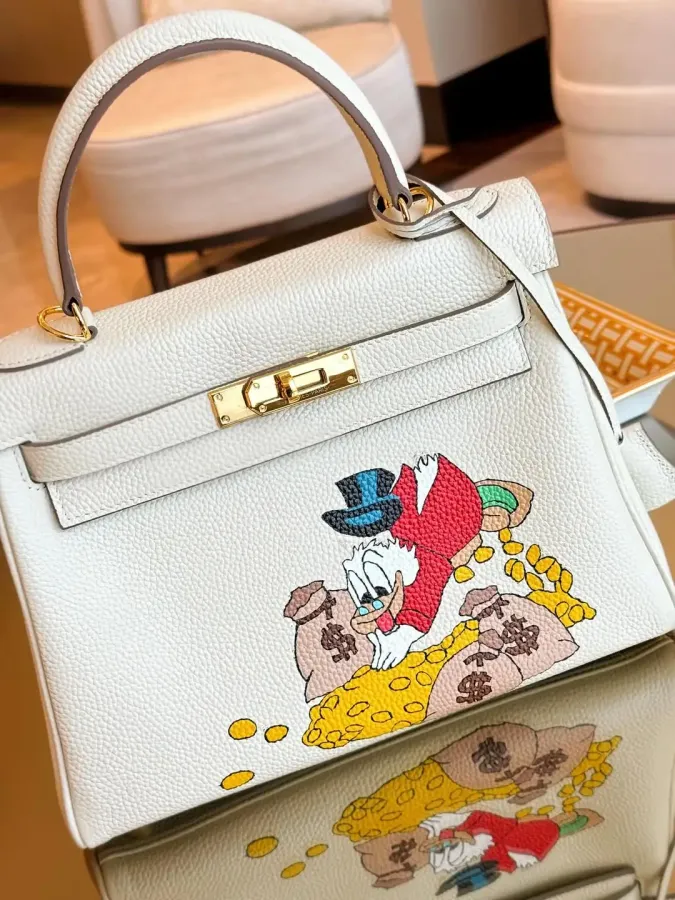
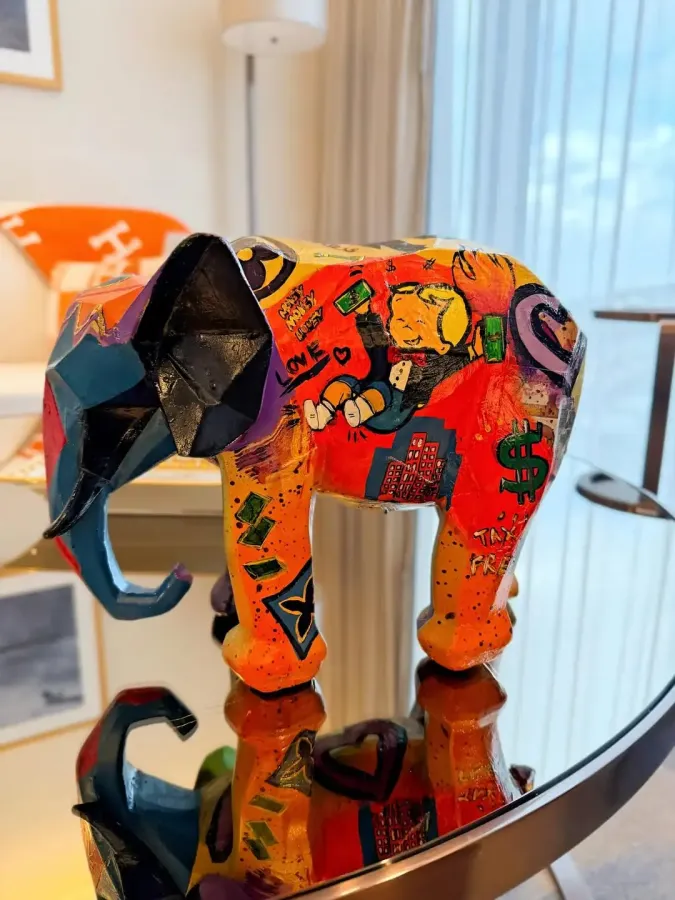
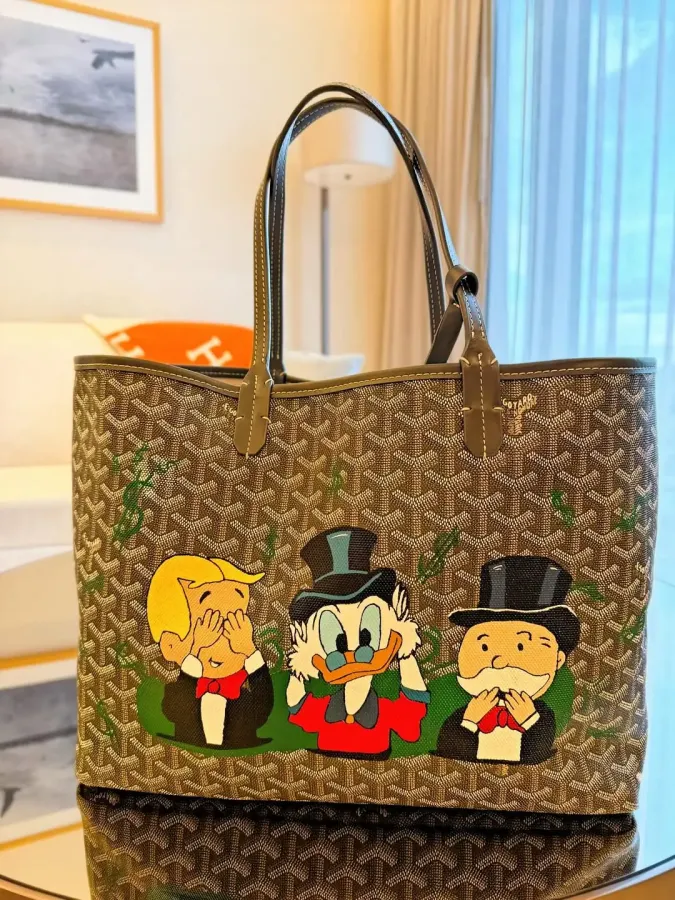
A cartoon character with a money bag, painted onto a Kelly: what makes hand painting on a bag good, why it cannot be undone, and why the same joke moved onto canvas.
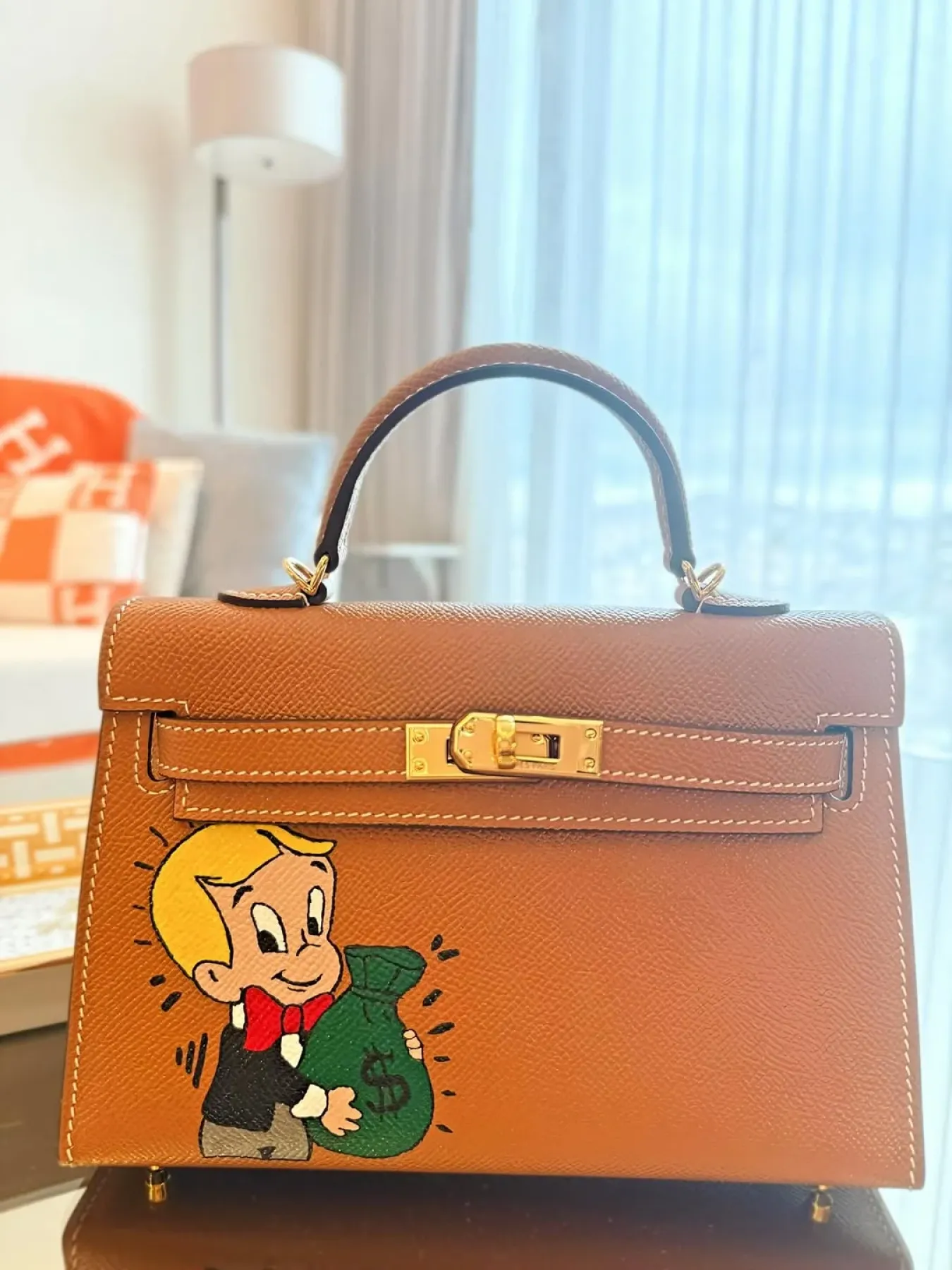
The bag in the photograph is a Kelly: gold, grained leather, gold hardware, white stitching. On its front is something no Hermès catalogue has ever shown — a blond cartoon boy in a bow tie, hugging a green money bag with a dollar sign on it, little lines around him to say it shines.
The joke is plain: on one of the hardest bags in the world to get, paint money in its most childish form — a sack full of dollars. This piece is about how that joke is built, what makes a hand-painted bag good or bad, and why the same idea moved onto canvas.
Why paint on a bag at all
A luxury bag says something about whoever carries it; a painting on it answers back. That is pop art's oldest trick: take a familiar object and write a comment on it in another language. Here the comment is ironic — the expensive bag and the cartoon “rich kid” say the same thing in two different tones of voice.
That is both the appeal and the risk: the painting changes the bag. There are thousands of the same model; there is one of the painted one.
What separates good hand painting
- Placement respects the hardware. The figure sits in the lower left of the body, below the flap and the lock. The lock, the strap and the places the flap rubs as it opens are left clear — that is where paint cracks first.
- The stitching is left alone. The edge stitch is the bag's own line; once paint spills over it, the piece stops being a painting on a bag and becomes a painted bag.
- The line is clean. Cartoon language is unforgiving: a bold, even outline, flat fields of colour, a crisp black. A shaky line shows immediately in the grain of the leather.
- The leather stays bare. Most of the bag is unpainted. The figure uses the leather's own colour as its ground; covering the whole surface would smother both the joke and the material.
A decision you cannot undo
Leather paint is permanent. The surface is prepared, the paint goes on in thin coats and is sealed with a protective finish; done well, it lasts for years. But it is close to impossible to remove, and that bears directly on the bag's resale value and on how it can be cared for later. Customisation is a choice, not a gift: the bag is now more an artwork than an accessory, and it will be judged as one.
So the question to ask before commissioning it is not “will it look good” but “will I ever want to see this bag unpainted again”.
The same joke, on canvas
That risk is exactly why the genre moved to canvas. Painting the image of the bag rather than the bag itself makes the same irony without anyone sacrificing a bag. Scale opens up too: a figure squeezed onto a 25 cm body can stand as large as the bag itself on a metre of canvas.
The same tests apply when you look at a good art hermes bag canvas: are the recognisable details — hardware, stitching — handled with care, is the line clean, does the comment crush the bag or talk to it.
A note on what you are looking at: pieces in this genre are independent artworks that respond to an iconic design. They are not affiliated with, endorsed by, licensed by or produced in collaboration with Hermès, and the trademarks and characters referenced belong to their owners.