A cartoon character diving into a heap of gold on a white Hermès bag: why the subject of this genre is always money, where the joke lives, and why the composition works.
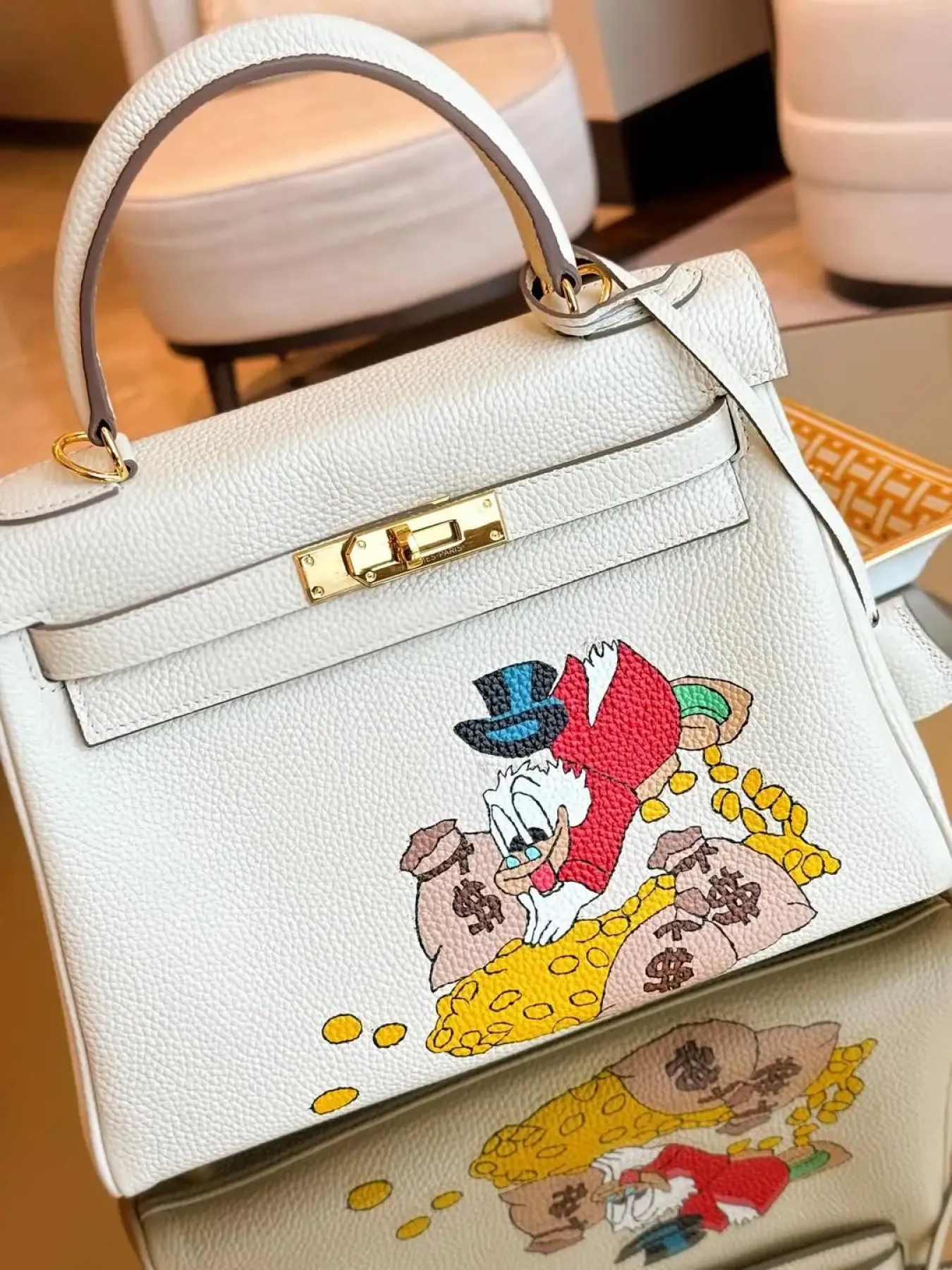
A Hermès Kelly in white grained leather — the familiar single-handle model that closes with a turn-lock at the front. Across the right half of its body, a cartoon duck in a top hat and spectacles dives head first into a heap of gold coins between money bags marked with dollar signs. The coins spill down the body, some reaching the bag's bottom edge.
In this genre the character changes; the subject does not: money. The sack, the coins, the dollar sign. This piece is about where that insistence comes from, and why it works so well on a Hermès bag.
Painting wealth is nothing new
Painters have always told stories about money through objects. The silver cup, the imported lemon and the Turkish carpet in a Dutch still life are not really about food or decoration; they tell you how rich the owner of the table is. Pop art did the same job louder: it put the dollar sign on canvas on its own, and carried cartoon characters onto gallery walls.
Money bags painted onto a bag are the most direct form of that lineage. The still life implied wealth; this picture counts it, sack by sack.
Where the joke lives
A luxury bag never says it is expensive; it waits for those who know to know. A heap of painted money says so openly, even childishly. The joke is in that gap: a quiet status object reading its own price aloud in the language of a cartoon.
The choice of character is not random either. A cartoon figure famous for being rich — swimming in its treasure, clutching its money, never letting go of the sack — reflects what the bag already means, exaggerated. Whoever carries it is in on the joke: the bag says both “I know what this cost” and “I am not taking it too seriously”.
Why this composition works
- White leather becomes the ground. The pale surface makes the red coat, the yellow gold and the brown sacks brighter than they would be anywhere else. The same painting would sink on a dark leather.
- The painting leaves half the bag bare. The figure sits to the right, below the lock; the left side and the flap are untouched. The bag still reads as a bag, and the painting sits on it like an event.
- The movement runs downward. The character dives head first and the coins pour to the bottom edge. The eye starts at the lock and falls to the base; the painting follows the bag's shape instead of fighting it.
- The gold hardware joins in. The gold of the lock and rings matches the painted gold. The bag's own parts and the painting's parts complete each other.
From bag to canvas
The reason this joke also moved onto canvas is simple: not everyone wants paint on a bag. On canvas the bag becomes the subject, and the heap of money can grow around it without having to fit its surface. A painting on a wall asks the same question as the bag: are you carrying status, or smiling at it?
The test for a good piece of hermes bag art is the same too: does the painting run over the bag, or talk to it? The composition above does the second — it turns the bag's colour, hardware and shape into part of its own joke.
A note on what you are looking at: pieces in this genre are independent artworks that respond to an iconic design. They are not affiliated with, endorsed by, licensed by or produced in collaboration with Hermès, and the trademarks and characters referenced belong to their owners.
More posts
All posts