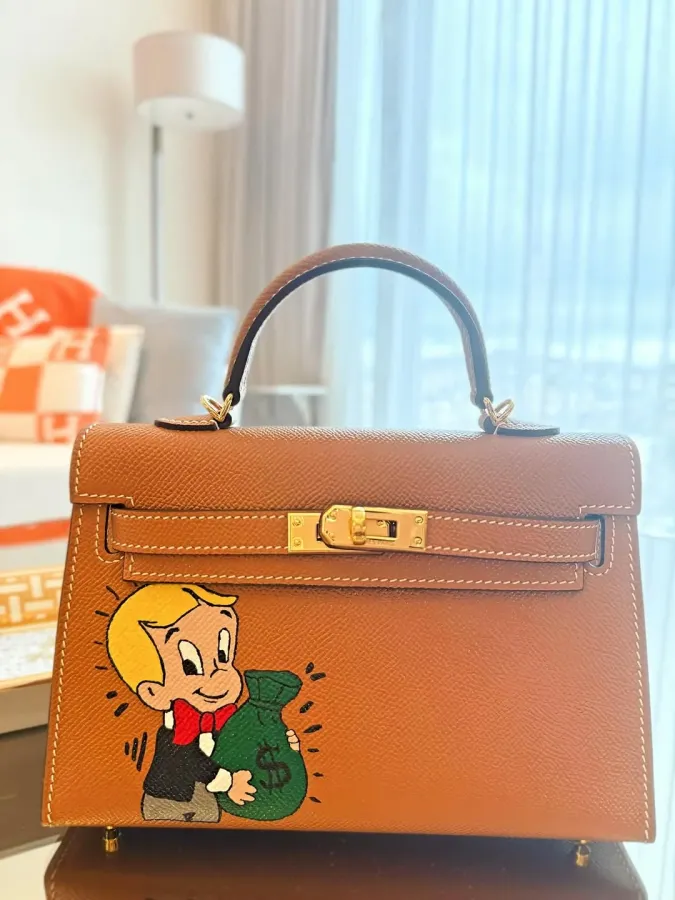
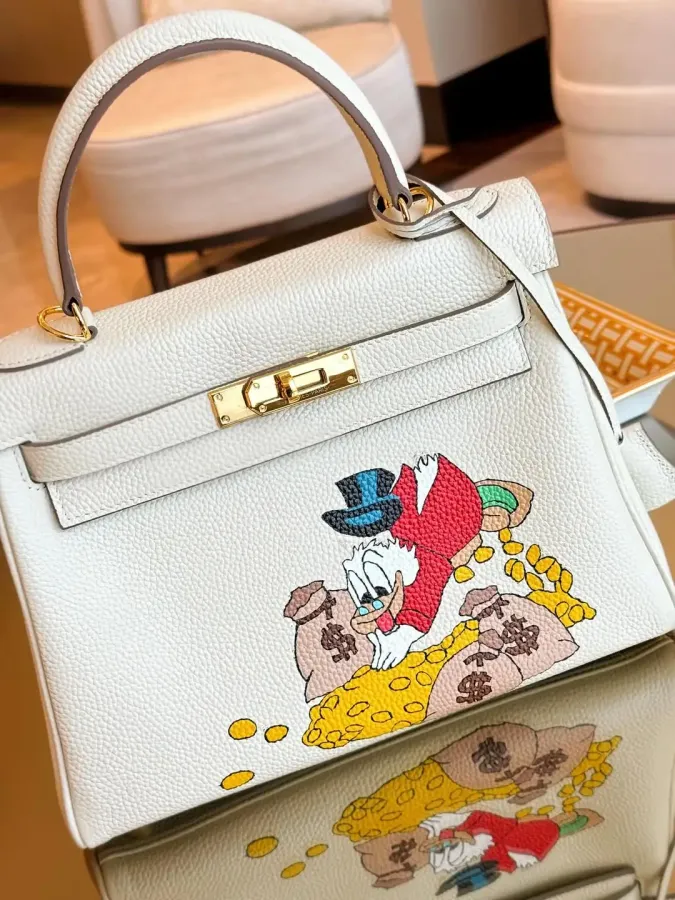
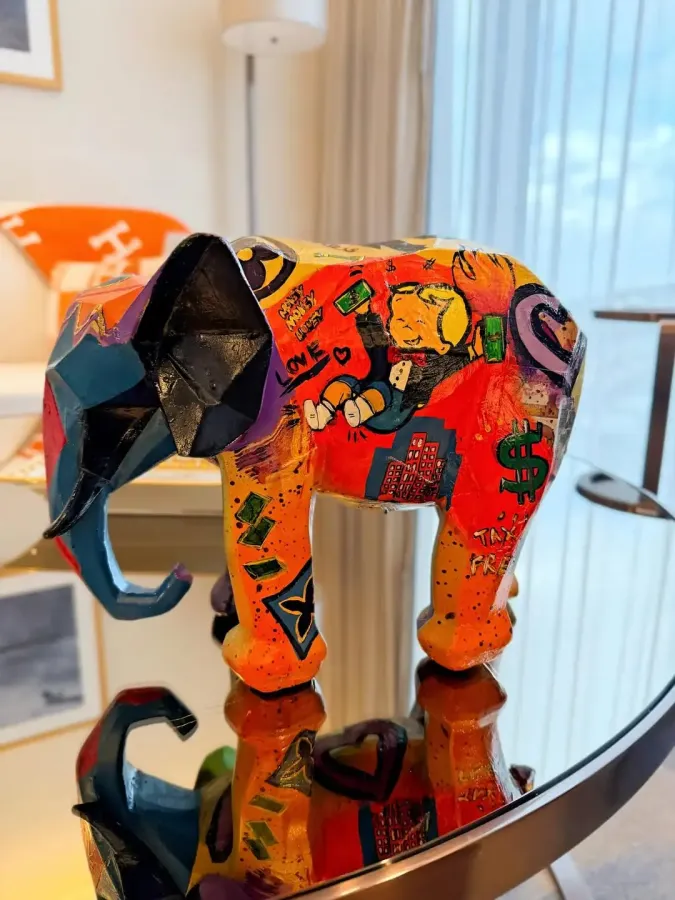
Three familiar faces keep turning up across the collection: top-hatted Mr. Monopoly, Richie Rich, the richest kid in the world, and Scrooge McDuck, swimming through his money bin. Where do these characters come from, and why do they get along so well with luxury bags?
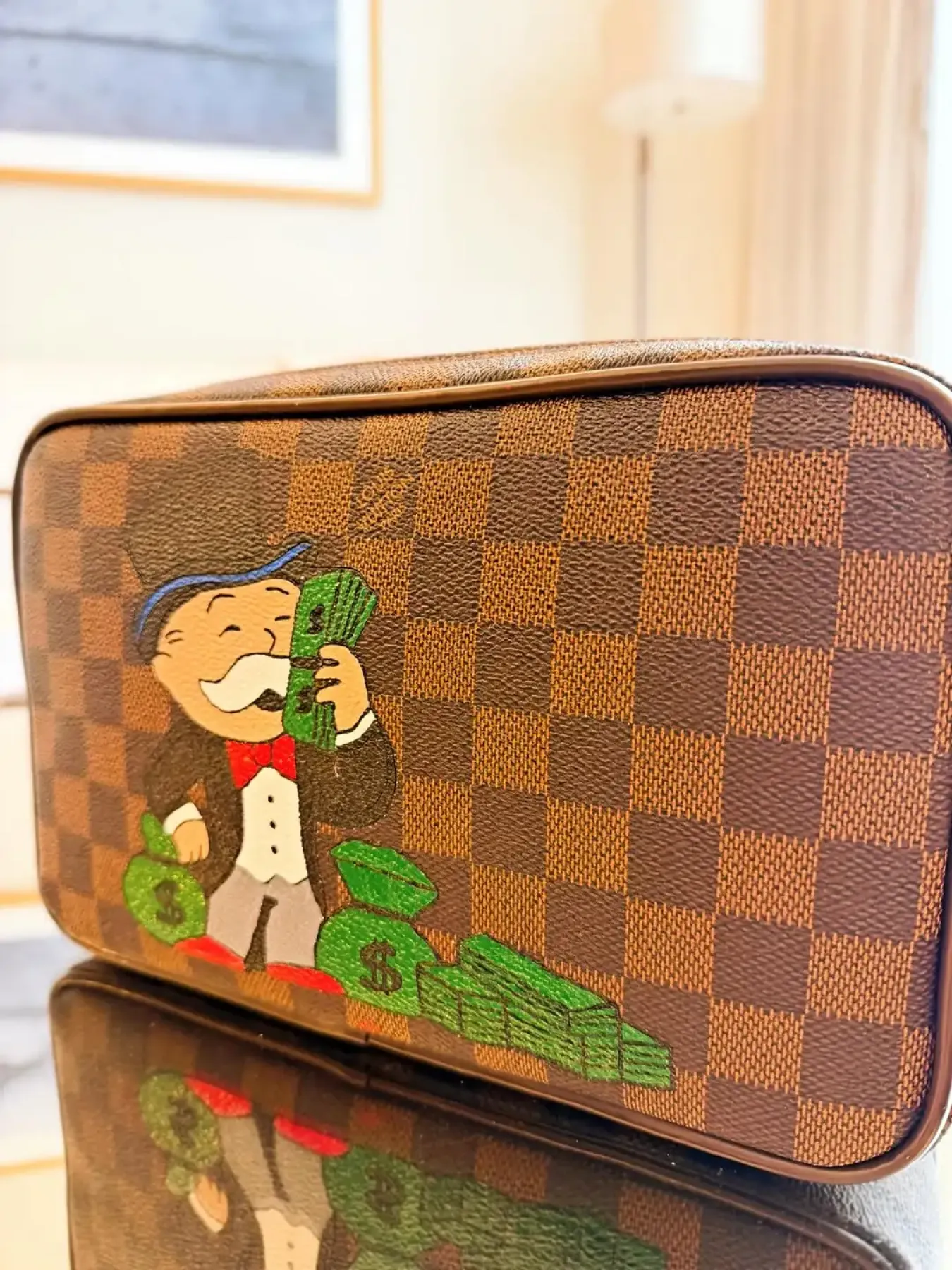
Beside a mini Hermès Kelly in one work, next to a Goyard or Louis Vuitton bag in another... Anyone browsing the collection meets the same three characters more than once. All three feel as familiar as a childhood memory, and all three are about the same thing: money.
Three characters, three generations
Mr. Monopoly, long known as Rich Uncle Pennybags, first appeared on Monopoly's cards in 1936. With his top hat, white moustache and cane, he was a caricature of the industrial tycoons of the early twentieth century, and over time he became the face of the game.
Scrooge McDuck was born in 1947 from the pen of Carl Barks: the richest duck in the world, a miser who loves swimming through the gold coins in his money bin but can't bear to spend a single one.
Richie Rich arrived in the pages of Harvey Comics in 1953 as "the richest kid in the world", and as a boy whose heart was as big as his fortune.
They belong to the childhoods of different generations, but they share a language: they talk about wealth without taking it seriously. For these characters money is not a show of power but a joke: a heap of gold, a top hat, banknotes spilling out of a wallet.
An old pop art habit
Turning cartoon characters and brands into art is not a new idea. In 1961 Roy Lichtenstein brought comics into the gallery with Look Mickey, a painting of Mickey Mouse and Donald Duck; a year later Andy Warhol showed his Campbell's soup cans. Both were asking the same question: can images everyone sees every day, images nobody calls "art", become the material of art?
Today the images everyone recognises include luxury patterns as much as cartoon characters. A Louis Vuitton monogram or Goyard's interlocking chevrons are as instantly recognisable as a cartoon hero's face. The works in the collection can be read within this tradition: bringing the two together in one frame creates a composition that both shows off wealth and smiles at it.
What to look for in a work
Next time you look at a piece, we suggest paying attention to a few details:
- How the character meets the object. Is the character carrying the bag, hugging it, or part of it? The same two elements tell a completely different story depending on the relationship between them.
- Scale. The same character does not say the same thing on a mini bag and on a large tote; the size of the object changes how much weight the character carries in the scene.
- Repetition. The same character meeting different brands across different works can be read as a series. Seeing the works side by side says more than seeing each one alone.
You can browse the whole collection on the products page.